
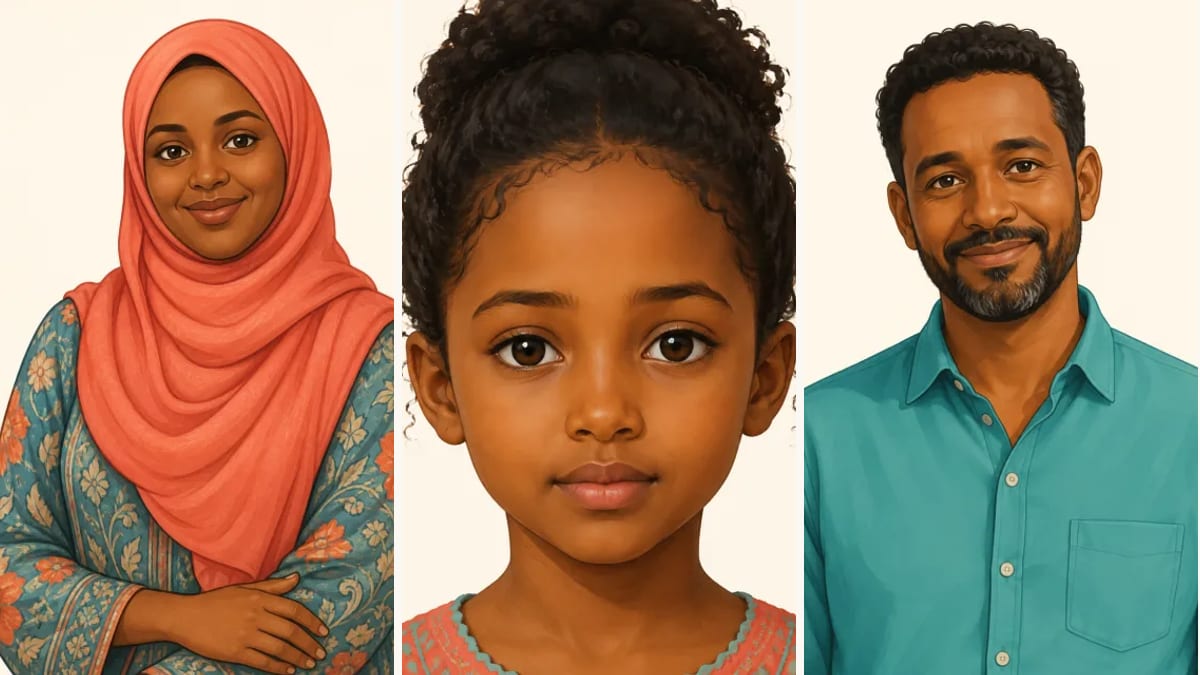
Every parent eventually looks up how to say “I love you” in Somali, and the answer is easy: waan ku jeclahay. But Somali families rarely say it the way an English-speaking family does. The love is there, spoken constantly, in words that do not translate as “love” at all, and this post gives you both the sentence and the words that actually carry it.
The sentence: waan ku jeclahay
Waan ku jeclahay means “I love you”. Take it apart and you can see how Somali builds a feeling:
- waan is “I”, with the small marker that turns a phrase into a statement
- ku is “you”, the person the feeling is aimed at
- jeclahay is “I love”, from jecel (fond, loving) plus ahay (I am)
So the sentence literally says “I am loving toward you”. To make it stronger, put aad (very) at the front: aad baan kuu jeclahay (I love you very much).
You will see the verb spelled two ways. Standard spelling drops a vowel and writes jeclahay; the Luuqad app writes it jecelahay, syllable by syllable, which is closer to how many speakers say it. Both are understood by every Somali on earth. The dictionary page for waan ku jecelahay has the native recording, so your child can copy the sound rather than the letters.
Jeclahay and jacayl
Jeclahay is the verb, and it does double duty. It means “love”, and it also means “like”. Waxaan jeclahay bariis (I like rice) uses exactly the same word as waan ku jeclahay. Context and aad (very) do the work that English does with two separate verbs.
Jacayl is the noun, “love” itself. It is the word of Somali poetry and song, where love has been a subject for as long as anyone has been composing verse. Somalia has long been described as a nation of poets, and jacayl is one of the words that earned it the name. Children will meet it in song titles and in the way adults tease each other. They do not need it to say how they feel. Jeclahay does that.
Why a mother calls her daughter hooyo
Here is the thing that surprises people who learn Somali from a book. Hooyo means mother. Yet a Somali mother calls her own child hooyo, and a father calls his child aabo (father). A grandmother says ayeeyo (grandmother) to her grandchild.
It is not a mistake and it is not a nickname. The parent’s own title, turned back toward the child, is the everyday Somali way of saying “mine” and “beloved” at the same time. When a mother says kaalay, hooyo (come here, hooyo) she is not calling herself. She is wrapping the child in the word.
If your child has only ever heard hooyo as a label, this is worth explaining. The word they say most is also the word they are called by. The Family topic has all ten family words with native audio, and the page for hooyo explains the two-way use.
Macaan, qalbi and the everyday endearments
Somali affection lives in adjectives and small nouns, said in passing. These are the ones a child will hear most.
Macaan means sweet or delicious. It is said of xalwo (the sticky Somali sweet) and of people. Hooyo macaan is “sweet mom”, and a child is called macaanto (sweetie) from the day they are born. Waa macaan about a person means they are lovely.
Qalbi means heart, the feeling kind rather than the organ, and on its own it is a term of address: “my heart”. Parents use it, grandparents use it, and older siblings use it when they want something.
Walaal means sibling, and Somalis use it for anyone they feel warmly toward, related or not. Abaayo (sister) and aboowe (brother) work the same way. A child who is called abaayo by an aunt’s friend is being told they belong.
Waad qurux badantahay means “you are beautiful”. It is said to daughters, granddaughters and nieces without any occasion at all.
Waan kuu xiisay means “I miss you”, and it is what the video call is really for.
Love that arrives as a plate of food
Ask a Somali adult how they knew their mother loved them and many will describe food before they describe words. The question ma cuntay? (have you eaten?) is asked before anything else, by phone, on arrival, at midnight. Wax cun (eat something) follows regardless of the answer.
The best piece of hilib (meat) goes to the child. The canjeero (the soft fermented flatbread) is torn up for the small one who cannot manage it. A container of sambuus (fried filled pastries) travels across the city because someone mentioned they liked them. None of this comes with the sentence waan ku jeclahay attached. It does not need to.
Teach your child to hear this. When ayeeyo asks ma cuntay? on the call, she is saying I love you. The right answer is haa, waan cunay (yes, I ate), said warmly.
Love that arrives as a dua
The other language of Somali love is prayer. A duco (a prayer said for someone) is the blessing elders give and children collect. Ilaahay ha ku barakeeyo (may God bless you) is said when a child does something well. Ilaahay ha ku nabad geliyo (may God keep you safe) is said at the door and at the end of calls.
In Somali homes the parents’ duco is treated as something precious, a wish that carries weight because of who says it. A grandparent who ends every call with a duco is not being formal. They are giving the child the most valuable thing they have.
The phrases at a glance
| Somali | Meaning | Who says it |
|---|---|---|
| Waan ku jeclahay | I love you | anyone, to anyone they love |
| Aad baan kuu jeclahay | I love you very much | parents, grandparents |
| Hooyo / aabo | mother / father, and “my child” | a parent to their child |
| Macaanto | sweetie | adults to children |
| Hooyo macaan | sweet mom | a child to their mother |
| Qalbi | my heart | family, in passing |
| Walaal | sibling, dear one | between anyone |
| Ma cuntay? | have you eaten? | every elder, always |
| Waan kuu xiisay | I miss you | across the distance |
| Ilaahay ha ku barakeeyo | may God bless you | elders to children |
Teaching it to your child
Start with the sentence and end with the culture.
- Say it at bedtime. Waan ku jeclahay once a night, in Somali, and wait for it back. The reply is the same sentence.
- Use the endearments on purpose. Call your child macaanto and qalbi out loud, at home, in front of their friends if you dare. They will learn what the words mean from how they feel.
- Explain hooyo. Tell them why you call them by your own name. It is one of the loveliest facts about the language, and children remember it.
- Point out the food and the duas. When a relative asks ma cuntay? or says Ilaahay ha ku barakeeyo, tell your child afterward what just happened. That was love.
- Let them hear it from a native voice. The Express Emotion lesson in Luuqad teaches waan ku jecelahay alongside fifteen other feeling sentences, all recorded by a Somali speaker, and the full list is on the expressing emotions page.
Somali has a perfectly good sentence for “I love you”. The families who speak it best use it least, because they have so many other ways to say it.
Frequently asked questions
How do you say I love you in Somali?
Waan ku jeclahay. To make it stronger, aad baan kuu jeclahay means I love you very much.
Why does a Somali mother call her child hooyo?
Hooyo means mother, but parents use their own title back to their children as a term of affection. A mother calls her son or daughter hooyo, and a father calls them aabo.
What does macaan mean?
Sweet or delicious. It describes food, and it also describes a person you love: hooyo macaan is 'sweet mom' and macaanto is 'sweetie'.
Try Luuqad with your child tonight
Ten minutes. Real voices. 4.6 stars on the App Store.
Written by Amina Yusuf. Writes about Somali food, culture and family life. Illustrations from the Luuqad app.