
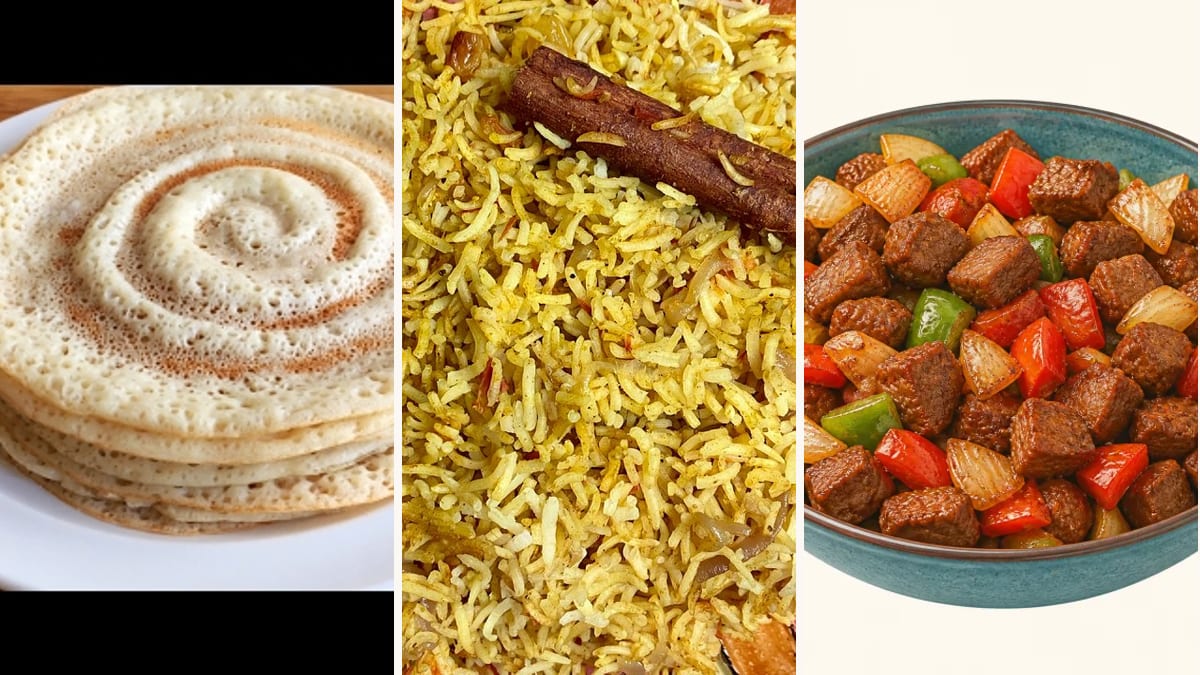
Eid is the day the whole family sits down together, and it is also the day a child’s Somali gets tested. Aunts pass plates, grandmothers ask questions, and someone will hand your child a bowl and expect them to know what is in it. Here are the ten food words that carry a Somali child through the meal, with the phrases to use while they eat.
Why food words stick
Children learn the words they need. Nobody has to drill bariis (rice) with flashcards, because bariis appears on the table most days, steaming, with a name attached. Food words are said at close range, by people the child loves, at a moment when the child wants something. That is the ideal condition for a word to stick.
It helps that most of these foods have no English name. There is no translation for canjeero. A child either knows the Somali word or points. So the ten words below are not vocabulary for its own sake. They are the words a child needs to join the table.
Breakfast: canjeero, malawax, muufo
Canjeero is the soft, spongy flatbread made from a fermented batter and cooked on one side, so the top is covered in tiny holes. It is quraac (breakfast) in most Somali homes: torn into pieces, sprinkled with sugar and a spoon of subag (ghee) or sesame oil, or soaked in the juices of a stew. In the north you will also hear it called laxoox. It is the first food word most Somali children learn, and it has its own page in the dictionary: canjeero.
Malawax is canjeero’s sweeter cousin: a thin, eggy pancake, closer to a crepe, cooked on both sides and eaten rolled up with sugar or honey. Children tend to prefer it, which is why it appears on weekend mornings and on Eid.
Muufo is a round flatbread baked against the wall of a clay oven, often with maize flour in the dough, so it is thicker and drier than canjeero. It is a southern specialty, eaten with stew, sesame oil or sweet tea.
Lunch and dinner: bariis, baasto, hilib, suqaar
Bariis is rice, and in a Somali kitchen it is rarely plain. Bariis iskukaris is cooked with spices, onion and often meat in the same pot, so it comes out golden and fragrant. It is the centerpiece of qado (lunch), and a moos (banana) on the side is not optional in many families.
Baasto is pasta. The word came with the dish during the Italian period, and spaghetti with a spiced tomato and meat suugo (sauce) is now as Somali as anything else on this list. Watch the spelling: Somali has no P, so pasta became baasto.
Hilib is meat. Goat, hilib ari, is the everyday choice, and camel, hilib geel, is the special occasion one. A child who can ask hilib ma jiraa? (is there meat?) will be well fed.
Suqaar is meat cut into small cubes and cooked fast with onion, pepper and spices. It is eaten with everything: piled on canjeero, spooned over bariis, mixed into baasto. It is the dish of casho (dinner) in many homes and the one children ask for by name.
The Eid table: xalwo and sambuus
Xalwo is the sticky, glossy sweet made from sugar, ghee, cornstarch and cardamom, sometimes with nutmeg and peanuts. It is cut into cubes and served at Eid, at weddings, and whenever guests arrive. It is intensely sweet, and every Somali child has a strong opinion about it.
Sambuus are triangular pastries filled with spiced minced meat, sometimes tuna or vegetables, and fried until crisp. They belong to afur (the evening meal that breaks the fast in Ramadan) and then, by a short walk, to Eid. If your child helps fold the pastry the night before, the word will be theirs by morning.
Shaah, and two drinks that go with everything
Shaah is tea, but Somali shaah is a specific thing: black tea boiled with cardamom, cinnamon and cloves, then sweetened. With milk it is shaah cadeys. It is served after every meal and to every guest, and pouring it for the elders is one of the first jobs a child is trusted with.
Two more words are not dishes but come up at every meal. Caano is milk, and camel milk, caano geel, is prized above all. Biyo is water, and biyo i sii (give me water) is probably the most useful sentence a child can own.
The ten words at a glance
| Somali | What it is | Say at the table |
|---|---|---|
| canjeero | spongy fermented flatbread | Canjeero i sii. Give me canjeero. |
| malawax | thin sweet pancake | Waxaan rabaa malawax. I want malawax. |
| muufo | oven-baked flatbread | Kani waa muufo. This is muufo. |
| bariis | rice, usually spiced | Bariis ma rabtaa? Do you want rice? |
| baasto | pasta with sauce | Waxaan jeclahay baasto. I like pasta. |
| hilib | meat | Hilib ma jiraa? Is there meat? |
| suqaar | diced meat stir-fry | Suqaar waa macaan. Suqaar is delicious. |
| xalwo | sticky sweet | Xalwo in yar i sii. Give me a little xalwo. |
| sambuus | fried filled pastry | Sambuus ma rabtaa? Do you want sambuus? |
| shaah | spiced tea | Shaah i sii, fadlan. Tea, please. |
All ten, plus caano and biyo, are in the Somali food words topic with native audio and pictures.
Phrases for the table
A few sentences turn the vocabulary into conversation. Keep them short; the table is loud.
- Bismillaah. Said before the first bite, by everyone.
- Biyo i sii. Give me water. Swap in any food word: shaah i sii, bariis i sii.
- Waa macaan. It is delicious. The single most welcome thing a child can say to the cook.
- Waan dhergay. I am full. Expect it to be ignored at least once.
- Mahadsanid, hooyo. Thank you, mom. Or ayeeyo (grandmother), or eedo (aunt), whoever cooked.
- Ciid wanaagsan. Happy Eid, said to everyone the child meets that day.
If your child is old enough to order for themselves at a Somali restaurant, the ordering phrases topic adds waxaan rabaa inaan dalbado (I would like to order) and biyo ma i siin kartaa? (can I have water?).
Make it a game before Eid
Start a week out. Put three foods on the table and name them in Somali only. Ask xalwo ma rabtaa? and wait for haa (yes) or maya (no). Let your child pour the shaah and say the word as they pass each cup. At the shop, hand them the list and have them find the bariis and the baasto on the shelf.
In the Luuqad app, the Food lesson works through the day from quraac to casho, and the Market Day game has children fill baskets with the right number of treats, which pairs food words with numbers. Ten minutes a day for a week is enough to walk into Eid knowing the whole table.
Then let the aunts do the rest. They will.
Frequently asked questions
What is canjeero?
Canjeero is the soft, spongy Somali flatbread made from a fermented batter and cooked on one side. It is the everyday breakfast in most Somali homes, eaten with sugar and ghee or torn into a stew.
What do Somali families eat at Eid?
It varies by family and region, but xalwo (the sticky sweet), sambuus (fried pastries with a spiced filling), spiced bariis with hilib, and pots of shaah are on most Eid tables.
How do you say I am full in Somali?
Waan dhergay. It is the polite way to decline a third helping, and it rarely works on a grandmother.
Try Luuqad with your child tonight
Ten minutes. Real voices. 4.6 stars on the App Store.
Written by Amina Yusuf. Writes about Somali food, culture and family life. Illustrations from the Luuqad app.