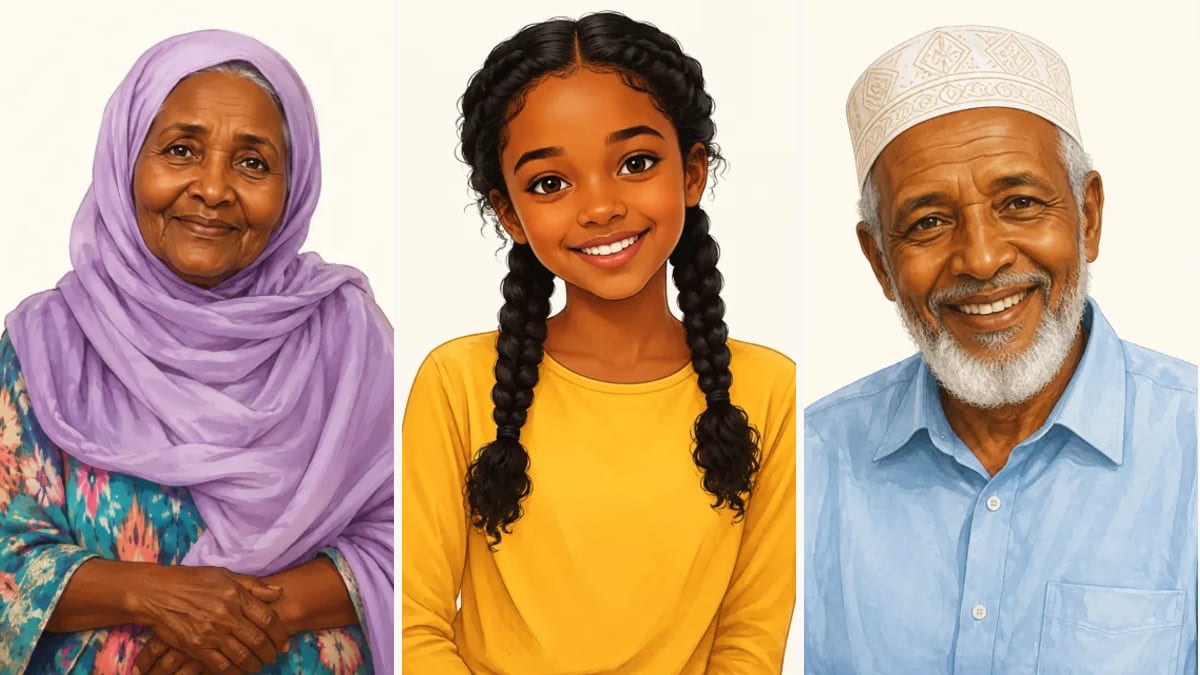
The video call connects, ayeeyo (grandmother) appears, and there is a pause. This is the moment every diaspora parent knows: the child is looking at you, wondering what to say. This guide gives them the words, in the order the conversation usually goes, with the replies the elders on the other end expect.
The greeting that comes before everything
Before good morning, before names, before anything, comes Assalaamu calaykum (peace be upon you). It is Arabic in origin and Somali in daily use. It opens phone calls, doorways, shop visits and video calls at any hour. The reply is Wa calaykum salaam (and peace be upon you).
In Somali culture the younger person greets first. A child who starts the call with Assalaamu calaykum, ayeeyo has done the most important thing already. Everything below is what comes next.
Morning, afternoon, evening
Wanaagsan means good, and Somali attaches it to the time of day.
- Subax wanaagsan (good morning), from waking until around midday
- Galab wanaagsan (good afternoon), from midday until sunset
- Habeen wanaagsan (good evening), after dark, and also the way to say good night
The reply is the same phrase back. On a call across time zones, use the greeting for the elder’s time of day, not yours. A child in Toronto saying habeen wanaagsan to a grandfather in Hargeisa at his bedtime will get a delighted laugh.
How are you, and the replies elders expect
Iska warran is the everyday “how are you”. Literally it asks the other person to tell news of themselves, and it is used between friends, family and strangers alike. The dictionary page for iska warran has the native recording.
The classic reply is one word: nabad (peace). It means all is well. A fuller answer is waan fiicanahay (I am fine). To return the question, add adiguna? (and you?), so a complete exchange sounds like this:
- Iska warran? How are you?
- Nabad, adiguna? Fine, and you?
- Waan fiicanahay. I am fine.
You will also hear Nabad miyaa? (is it peace?), especially from older relatives, and the reply is Waa nabad (it is peace). Sidee tahay? (how are you?) is another version of the same question, and the same replies work.
Elders rarely stop at one question. After the child, they ask about everyone else: Hooyo ka warran? (how is mom?). Way fiicantahay (she is fine) answers it. Teach the child that the questions will keep coming and that nabad is always a safe reply.
Names and introductions
Magacaa? means “what is your name?”. The answer is Magacaygu waa followed by the name: Magacaygu waa Hodan (my name is Hodan). A new relative, a family friend visiting, a teacher at dugsi (the weekend Somali or Qur’an school): the same two sentences cover all of them.
Xagee baad ka timid? asks “where are you from?”, and Waxaan ka imid plus a place answers it: Waxaan ka imid Minneapolis. Diaspora children get asked this constantly, and having the answer ready spares them the awkward pause.
Thank you and you’re welcome
Mahadsanid is thank you, and it is used more than English speakers expect: for food, for a gift, for a compliment, at the end of a call. The reply is Adaa mudan, which literally means “you deserve it” and works exactly like “you’re welcome”.
Two more courtesy words earn their keep. Fadlan (please) softens any request: Biyo i sii, fadlan (give me water, please). Raali ahow (I am sorry) is what a child says after knocking over the shaah (tea). The usual reply is waa caadi (it is fine).
Saying goodbye
Nabadgelyo is the standard goodbye and means roughly “go in peace”. The reply is nabadgelyo back, or the shorter, casual nabadeey (bye). Is arag danbe (see you later) is lighter and is answered with haye (okay). A child who ends the call with Nabadgelyo, ayeeyo. Waan ku jeclahay (goodbye, grandmother, I love you) has made someone’s week.
Every greeting and its reply
| You say | It means | They reply |
|---|---|---|
| Assalaamu calaykum | peace be upon you | Wa calaykum salaam |
| Subax wanaagsan | good morning | Subax wanaagsan |
| Galab wanaagsan | good afternoon | Galab wanaagsan |
| Habeen wanaagsan | good evening, good night | Habeen wanaagsan |
| Iska warran? | how are you? | Nabad or Waan fiicanahay |
| Nabad miyaa? | is all well? | Waa nabad |
| Magacaa? | what is your name? | Magacaygu waa… |
| Xagee baad ka timid? | where are you from? | Waxaan ka imid… |
| Mahadsanid | thank you | Adaa mudan |
| Raali ahow | I am sorry | Waa caadi |
| Nabadgelyo | goodbye | Nabadgelyo |
| Is arag danbe | see you later | Haye |
All of these are in the Small Talk topic, seventeen phrases with native audio, and the family words that go with them, from ayeeyo to abti (maternal uncle), are in Family.
Rehearsing for the video call
Greetings are performed, not studied, so rehearse them like a small play.
- Write the script. Six lines: the opening salaam, a time-of-day greeting, iska warran, an answer, mahadsanid for whatever the elder says next, and a goodbye. Put it on a sticky note beside the screen.
- Practise the reply, not just the line. Children freeze when the elder answers. Play the grandmother yourself: say Nabad, adiguna? and wait until the child replies without looking at you.
- Match the time zone. Check what time it is where the elder lives and pick the greeting together. It doubles as a geography lesson.
- Let the app be the elder. In Luuqad, the Small Talk lesson plays each phrase in a native voice and shows the reply to expect, so the child hears Wa calaykum salaam from someone other than you before they hear it from awoowe (grandfather).
- Accept English in the middle. A call that starts and ends in Somali, with English in between, is a good call. The greetings are the bookends that matter most to the person on the other side.
Twelve phrases, most of them two words long. That is all it takes to start and finish a conversation the way a Somali elder hopes it will go.
Frequently asked questions
How do you say hello in Somali?
In practice, Assalaamu calaykum, answered with Wa calaykum salaam. For a specific time of day, subax wanaagsan (good morning), galab wanaagsan (good afternoon) or habeen wanaagsan (good evening).
How do you reply to iska warran?
Nabad (peace, meaning all is well) or waan fiicanahay (I am fine). Add adiguna? to ask 'and you?' back.
What does nabadgelyo mean?
It is the standard goodbye and means roughly 'go in peace'. The reply is nabadgelyo back, or the shorter nabadeey.
Try Luuqad with your child tonight
Ten minutes. Real voices. 4.6 stars on the App Store.
Written by Luuqad team. The people who make Luuqad. Illustrations from the Luuqad app.